How to Say “Thank You” in 12 Southern African Languages
Ke a leboga, ngiyabonga, enkosi, ndaboka, inkomu. Thank you in twelve Southern African languages, with the stronger form for when you really mean it.
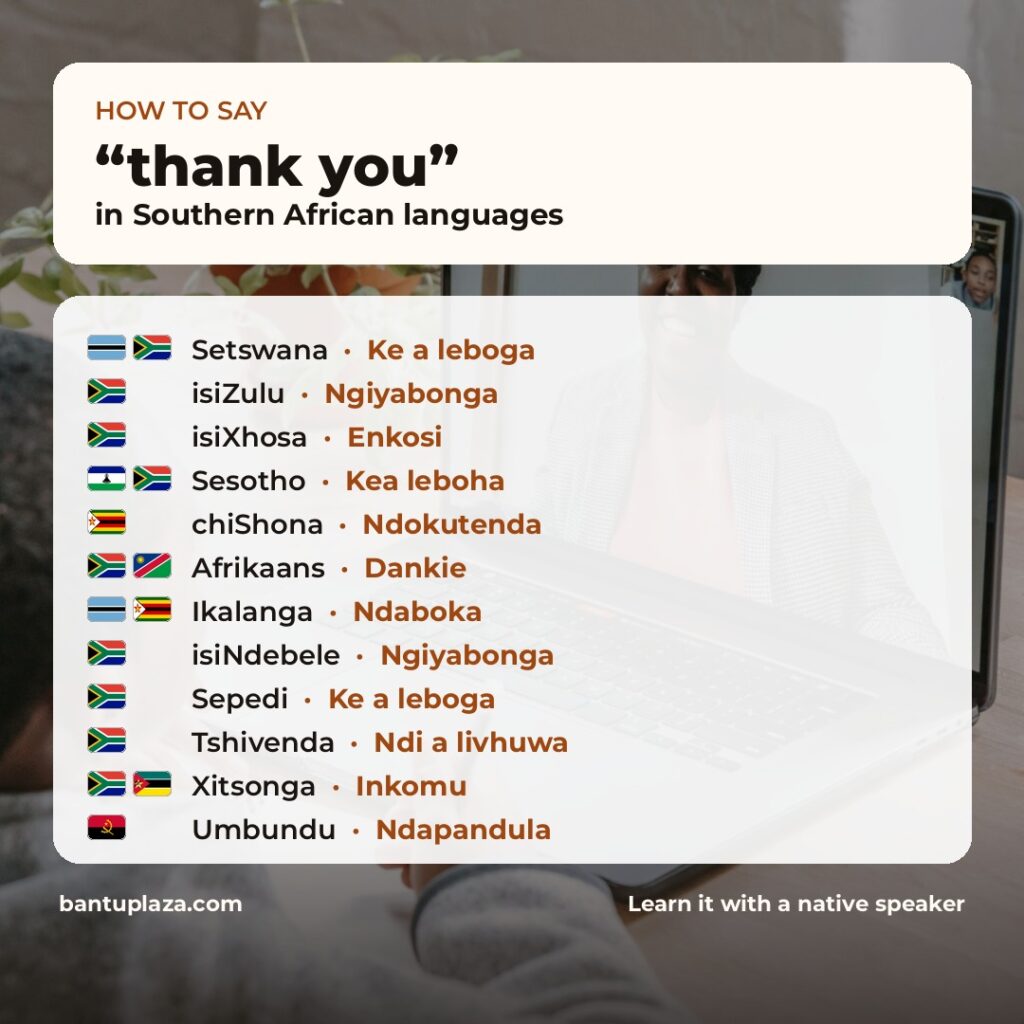
If you learn one phrase before you travel, make it this one. Thank you is the fastest way to turn a transaction into a conversation. Here is how to say thank you in twelve languages taught on Bantu Plaza, with a say-it-like guide and the longer form for when you really mean it.
How to say thank you in twelve Southern African languages
| Language | Thank you | Say it like |
|---|---|---|
| Setswana | Ke a leboga | keh ah leh-BO-gha |
| isiZulu | Ngiyabonga | ngee-yah-BOHN-gah |
| isiXhosa | Enkosi | en-KOH-see |
| Sesotho | Kea leboha | KEH-ah leh-BOH-ha |
| chiShona | Maita basa (also Ndatenda, Ndokutenda) | mah-EE-tah BAH-sah |
| Afrikaans | Dankie | DUN-kee |
| Ikalanga | Ndaboka | ndah-BOH-kah |
| isiNdebele | Ngiyabonga (South African isiNdebele: Ngiyathokoza) | ngee-yah-BOH-ngah |
| Sepedi | Ke a leboga | keh ah leh-BOH-ghah |
| Tshivenda | Ndi a livhuwa | ndee ah lee-VHOO-wah |
| Xitsonga | Inkomu (also Ndza khensa) | in-KOH-moo |
| Umbundu | Ndapandula | ndah-pahn-DOO-lah |
When you really mean it
Most of these have a stronger form you can reach for when someone has gone out of their way:
- Setswana: Ke a leboga thata — thank you very much
- isiZulu: Ngiyabonga kakhulu
- isiXhosa: Enkosi kakhulu
- Sesotho: Kea leboha haholo
- Sepedi: Ke leboga kudu
- Afrikaans: Baie dankie
- Nyanja: Zikomo kwambiri
- Umbundu: Ndapandula calua
Two useful notes. In Nyanja, Zikomo is thank you and also excuse me, so it does double duty all day. In chiShona, Maita basa literally praises the work someone did for you, which is why it sounds warmer than a flat thanks.
How do you say thank you in Zulu?
Thank you in isiZulu is Ngiyabonga, said ngee-yah-BOHN-gah. For thank you very much, say Ngiyabonga kakhulu.
How do you say thank you in Setswana?
Thank you in Setswana is Ke a leboga, said keh ah leh-BO-gha, with a rolled r sound in the middle syllable. Sepedi uses the same phrase.
What is the difference between Enkosi and Ngiyabonga?
They are simply the isiXhosa and isiZulu words for thank you. Both are heard daily across South Africa, and using the right one for the person in front of you is noticed.
Over to you
Which one are you saying today? Try it out loud in a free five-minute lesson, with no account needed: Setswana, isiZulu, isiXhosa, Sesotho, chiShona, Afrikaans or Ikalanga.
Then say it to someone: book a 45-minute lesson with a native-speaker tutor, or start at your own pace with Teach Yourself.
Want to understand more than the translation?
Learn the language behind the culture.
Newsletter
Get one culture story a week
New stories, a word to try and a free lesson idea. No spam, unsubscribe anytime.

Join the conversation
Question for you Which one are you saying today?
Do you know this tradition, a different version of it, or the word for it in another language? Share it below.