How to Say ‘Father’ in Eight Southern African Languages
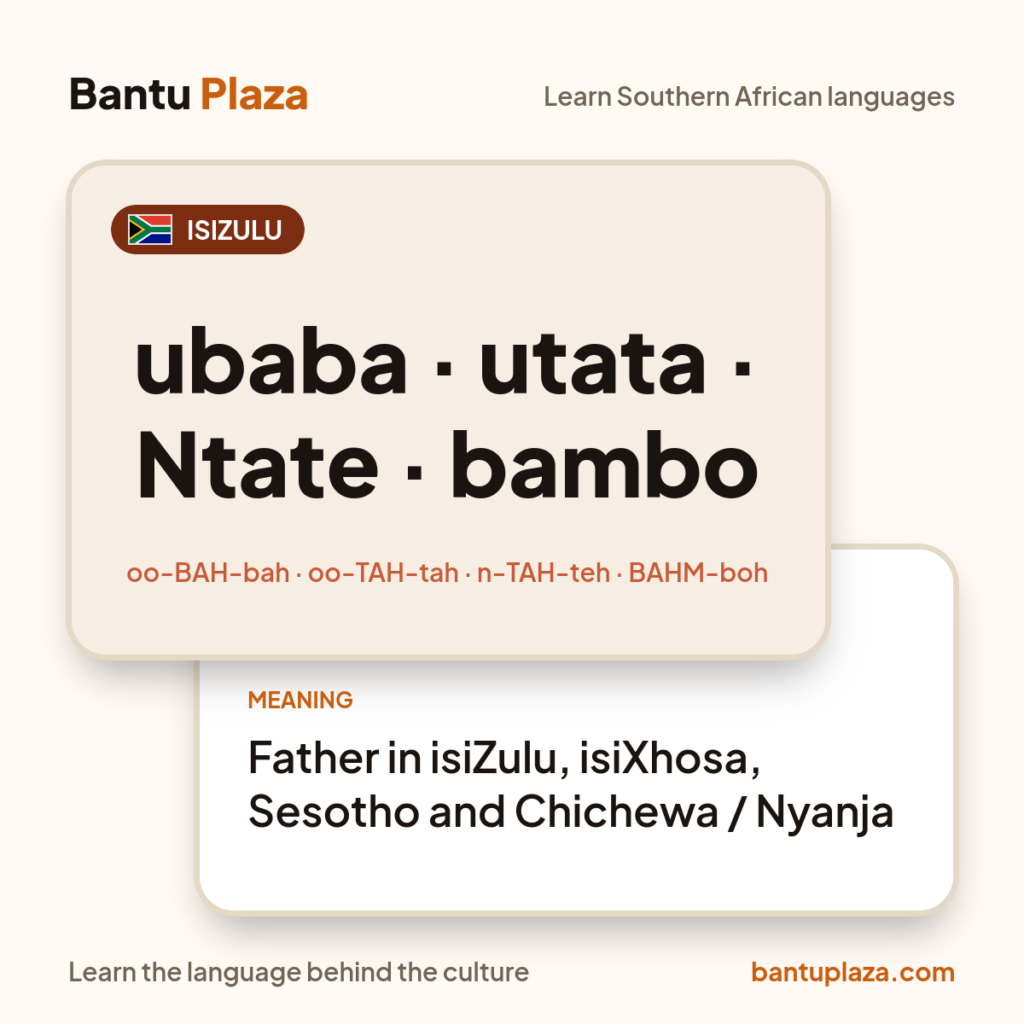
Baba, tata, rre, ntate, bambo, tatana, isia. One small word in eight languages, and what it tells you about respect.
“Father” is one of the first words children learn. In Southern Africa it is also one of the first words of respect adults use with men who are not their fathers at all. Here is how to say father in eight languages taught on Bantu Plaza, with a say-it-like guide for each and a note on when the word becomes a polite form of address.
How to say father in eight languages
| Language | Father | Say it like |
|---|---|---|
| isiZulu | ubaba (as a form of address, baba) | oo-BAH-bah |
| isiXhosa | utata (as a form of address, tata) | oo-TAH-tah |
| Setswana | Rre | rreh, with a rolled r |
| Sesotho | Ntate | n-TAH-teh |
| chiShona | baba | BAH-bah |
| Chichewa / Nyanja | bambo | BAHM-boh |
| Xitsonga | tatana | tah-TAH-nah |
| Umbundu | isia, and isiange for “my father” | ee-SEE-ah / ee-see-AHN-geh |
In Setswana greetings you will also hear Dumela, rra, hello sir.
What jumps out
Look along the list and you will spot families of sound. isiZulu and chiShona both use baba. isiXhosa tata, Xitsonga tatana and Sesotho ntate sound alike. Setswana Rre and Umbundu isia look quite different.
A word of caution before drawing conclusions: words that look similar are not automatically related by origin, and words that look different can still come from the same family. Linguists compare hundreds of words and sound patterns before saying two languages share a root. Enjoy the resemblances, but treat them as clues, not proof.
Father as a word of respect
In several of these languages the word for father reaches far beyond the family:
- The University of South Africa’s isiZulu course explains that you greet a man about your parents’ age as baba.
- The Nelson Mandela Foundation notes that many South Africans of all ages called Mandela Tata, the isiXhosa word for father, because he was a father figure to them.
- In Setswana, rra after a greeting turns “hello” into “hello, sir”.
So if someone calls you baba, tata or rra, they are not confused about your family tree. They are being polite.
Words to know
Father rarely travels alone. Here is mother in the same eight languages, from the same lessons:
| Language | Mother | Say it like |
|---|---|---|
| isiZulu | umama | oo-MAH-mah |
| isiXhosa | umama | oo-MAH-mah |
| Setswana | Mmê | mmeh |
| Sesotho | ‘Mè | MMEH |
| chiShona | amai | ah-MAH-ee |
| Chichewa / Nyanja | amayi | ah-MAH-yee |
| Xitsonga | manana | mah-NAH-nah |
| Umbundu | ina, and ina yange for “my mother” | EE-nah / EE-nah YAHN-geh |
In everyday conversation
These lines from our lessons show father and mother used as polite titles:
- Dumela, rra. Hello, sir. (Setswana)
- Sawubona, mama. Unjani? Hello, ma’am. How are you? (isiZulu)
- Ngiyaphila, baba. Wena unjani? I’m well, sir. And you? (isiZulu)
- Kea leboha, Ntate. Sala hantle! Thank you, sir. Stay well! (Sesotho)
Quick facts
- isiZulu and chiShona both use baba for father.
- In isiZulu, baba is also how you greet a man about your parents’ age.
- Tata is isiXhosa for father, and many South Africans called Nelson Mandela Tata.
- Similar-looking words are clues, not proof, that two languages share a root.
Frequently asked questions
How do you say father in isiZulu?
Father in isiZulu is ubaba, said oo-BAH-bah. When you address a man directly, including a man about your parents’ age, you say baba.
Why was Nelson Mandela called Tata?
Tata is the isiXhosa word for father. The Nelson Mandela Foundation notes that many South Africans of all ages called him Tata because he was a father figure to them.
How do you say father in Setswana?
Father in Setswana is Rre, said rreh with a rolled r. In a greeting, Dumela, rra means hello, sir.
Over to you
What do you call your own father, and is it the same word you use for older men in your community? Read more about the name Tata on the Nelson Mandela Foundation’s page on Mandela’s names, and see how isiZulu builds a whole family around the word in isiZulu Family Words: Baba, Mama and the Uncles Who Are Also ‘Father’.
Every language on this list has a free five-minute lesson. If isiZulu is your pick, visit the isiZulu hub, explore the isiZulu: Complete Language Pack (A1 to C2), start a free 5-minute isiZulu lesson or book a trial with an isiZulu tutor, and learn how to greet an elder properly.
Sources
Quick check
Did you already know the word "ubaba · utata · Ntate · bambo"?
ubaba · utata · Ntate · bambo oo-BAH-bah · oo-TAH-tah · n-TAH-teh · BAHM-boh
Father in isiZulu, isiXhosa, Sesotho and Chichewa / Nyanja
Learn more isiZulu words freeWant to understand more than the translation?
Learn the language behind the culture.
Newsletter
Get one culture story a week
New stories, a word to try and a free lesson idea. No spam, unsubscribe anytime.

Join the conversation
Question for you What do you call your own father, and is it the same word you use for older men in your community?
Do you know this tradition, a different version of it, or the word for it in another language? Share it below.