Poll: Do You Know Your Mutupo?
Your mutupo, your clan totem, links you to people you have never met. Do you know yours, and do you know what it means?
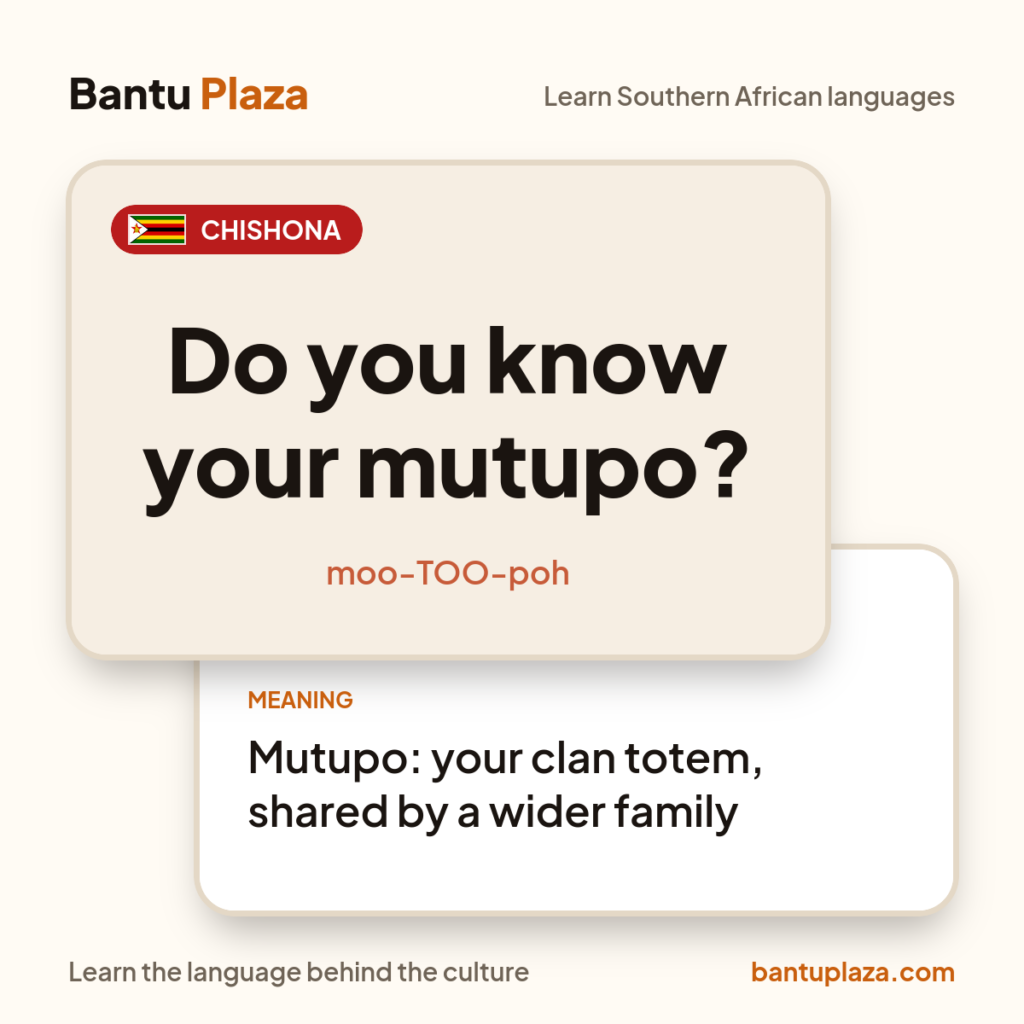
In chiShona, your mutupo is your clan totem. It is shared across a clan, so two strangers with the same mutupo can discover they belong to the same wider family. Plenty of people today know their totem well. Others know the name but not the story, or never asked. So we are curious.
Vote: do you know your mutupo?
- A: Yes, and I know what it means and where it comes from
- B: Yes, but I do not know the story behind it
- C: I am not sure, I need to ask a grandparent
- D: My family has a totem in another language (tell us which)
Answer in the comments. If you are happy to, share your mutupo and one thing your family told you about it. Please do not share anything your family considers private.
Totems in two languages
Totems are not only a Shona tradition. Historians of Zimbabwe record how, in the 19th century, some people from Shona-speaking communities who became part of the Ndebele state translated their totems into Ndebele: Moyo became Nhliziyo, and Shumba became Sibanda. The names changed language, but the identity travelled with them.
Historian Sabelo Ndlovu-Gatsheni, writing in African Studies Quarterly, cites Ngwabi Bhebe for these examples, and Bhebe’s list goes further: Shiri to Nyoni, Shoko to Ncube, Nyanga to Nkomo, Dziva to Siziba and Gumbo to Msipa. If your family chose option D, your totem may have a partner on the other side of that language line.
How to ask an elder about your mutupo
If you picked C, you are in good company. The easiest way to find out is to ask, and in chiShona the greeting comes first. Use the polite, plural forms with elders: they show respect, and skipping the greeting is considered rude, even in a hurry.
A short exchange from our chiShona lessons shows how naturally the question fits into family talk:
- Mhoroi, sekuru. Makadii? Hello, grandfather. How are you?
- Ndiripo. I’m fine.
- Mwanangu, unoziva mutupo wedu here? My child, do you know our totem?
- Hongu, sekuru, isu tiri veShumba. Yes, grandfather, we are of the Lion.
And when you have your answer, a warm Maita basa, thank you, goes a long way.
Words to know
| chiShona | Meaning | Say it like |
|---|---|---|
| mutupo | totem, clan name | moo-TOO-poh |
| mhuri | family | MHOO-ree |
| sekuru | grandfather or maternal uncle | seh-KOO-roo |
| Mhoroi | hello (polite, or to many) | mhoh-ROH-ee |
| Makadii? | how are you? (polite) | mah-kah-DEE-ee |
| Maita basa | thank you | mah-EE-tah BAH-sah |
| nhoroondo yemhuri | family history | nhoh-roh-OHN-doh yeh-MHOO-ree |
The “mh” in mhuri and Mhoroi is a breathy m: add a little puff of air.
Quick facts
- A mutupo is a chiShona clan totem, shared across a clan.
- Two strangers with the same mutupo can discover they belong to the same wider family.
- In the 19th century some Shona totems were translated into Ndebele, such as Moyo to Nhliziyo and Shumba to Sibanda.
Frequently asked questions
What is a mutupo?
A mutupo is a clan totem in chiShona. Because it is shared across a clan, it can link people who have never met.
How do I find out my mutupo?
Ask an older relative, such as a grandparent or sekuru. Greet first with the polite Mhoroi, then ask: Unoziva mutupo wedu here? (Do you know our totem?)
Do Shona totems have Ndebele versions?
Some do. Bhebe records people translating totems from chiShona into Ndebele in the 19th century, for example Moyo to Nhliziyo and Shumba to Sibanda.
For more on how totems travelled, read Ndlovu-Gatsheni’s article in African Studies Quarterly or our story Myth vs Fact: Ndebele and chiShona in Zimbabwe. Our chiShona hub has lessons for every level, and the chiShona: Complete Language Pack (A1 to C2) covers family and heritage words in depth.
Want to talk to your grandparents in their language? Start the free 5-minute chiShona lesson, or book a trial with a chiShona tutor and practise asking about your mutupo out loud.
Want to understand more than the translation?
Learn the language behind the culture.
Newsletter
Get one culture story a week
New stories, a word to try and a free lesson idea. No spam, unsubscribe anytime.

Join the conversation
Question for you What is a mutupo?
Do you know this tradition, a different version of it, or the word for it in another language? Share it below.