Why Nelson Mandela Was Called Madiba
Madiba was not a nickname. It is the name of Mandela's clan, and it goes back to an 18th-century Thembu chief.
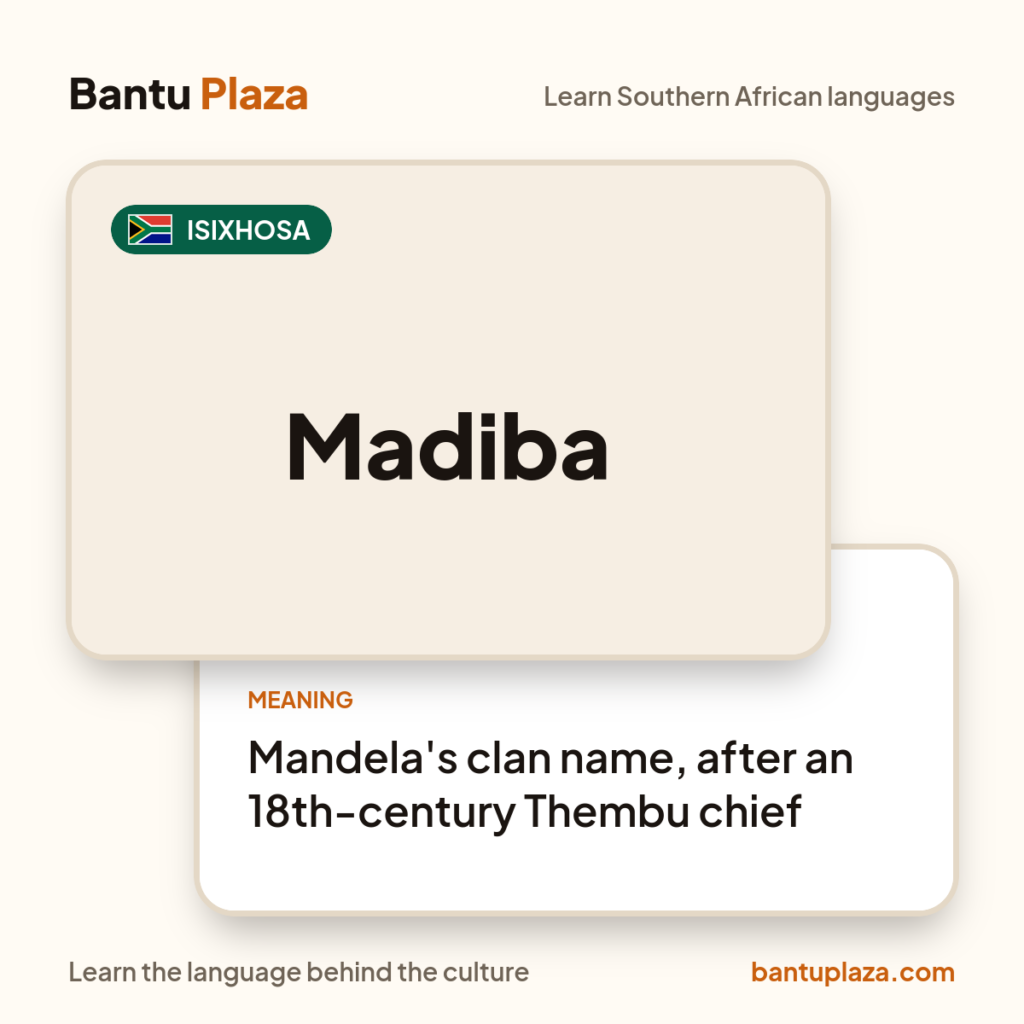
Across the world, people who never met him call Nelson Mandela “Madiba”. Many assume it is an affectionate nickname. It is something older and more meaningful: Madiba is the name of his clan, and it reaches back to an 18th-century Thembu chief.
Why was Nelson Mandela called Madiba?
According to the Nelson Mandela Foundation, Madiba is the name of the clan to which Mr Mandela belonged. The Foundation explains that a clan name is much more important than a surname, because it refers to the ancestor from whom a person is descended. Madiba was the name of a Thembu chief who ruled in the Transkei in the 18th century.
The Foundation adds one line that explains why the name spread so widely: it is considered very polite to use someone’s clan name. Calling him Madiba was a way of showing respect, not just familiarity.
A clan name, not a nickname
In isiXhosa, a clan name is an isiduko. It is a different thing from a surname, ifani, and from the personal name you are called by, igama. Mandela was his surname; Madiba placed him within a clan and a line of ancestors. That difference is why the name carries more weight than a nickname ever could.
One man, many names
Madiba was only one of the names he carried. The Foundation lists several, each with its own story:
- Rolihlahla: his birth name, given by his father. In isiXhosa it means “pulling the branch of a tree”, and colloquially “troublemaker”.
- Nelson: given on his first day at school by his teacher, Miss Mdingane, at a time when giving African children English names was common. Nobody is quite sure why she chose Nelson.
- Tata: the isiXhosa word for father, used by many South Africans of all ages because he was a father figure to them.
- Khulu: meaning great or grand, and also a shortened form of the isiXhosa word for grandfather.
Why clan names still matter
In many isiXhosa-speaking families, knowing and using a person’s clan name is part of good manners. It places people within a larger story of ancestors and relatives, which is exactly the point the Foundation makes about Madiba. When South Africans used the name, they were connecting a global figure back to his family and his roots.
Words to know
| isiXhosa | Meaning | Say it like |
|---|---|---|
| utata | father | oo-TAH-tah |
| utatomkhulu | grandfather; “Khulu” was shortened from it | oo-tah-tohm-KHOO-loo |
| isiduko | clan name | ee-see-DOO-koh |
| ifani | surname | ee-FAH-nee |
| igama | name | ee-GAH-mah |
| Molo | hello (to one person) | MOH-loh |
| Molweni | hello (to a group) | moh-LWEH-nee |
In everyday conversation
Greeting properly comes before any other question in isiXhosa:
- Molo. Hello (to one person).
- Unjani? How are you?
- Ndiphilile. I’m well.
- Ngubani igama lakho? What is your name?
Quick facts
- Madiba is the name of Nelson Mandela’s clan.
- Madiba was a Thembu chief who ruled in the Transkei in the 18th century.
- A clan name refers to the ancestor from whom a person is descended, and using it is considered very polite.
- Rolihlahla, his birth name, means “pulling the branch of a tree”, colloquially “troublemaker”.
- Tata means father, and Khulu means great or grand.
Frequently asked questions
What does Madiba mean?
Madiba is the name of Nelson Mandela’s clan. It comes from a Thembu chief who ruled in the Transkei in the 18th century.
Why do people call Mandela Tata?
Tata is the isiXhosa word for father. Many South Africans of all ages used it because he was a father figure to them.
What was Nelson Mandela’s birth name?
His birth name was Rolihlahla, given by his father. In isiXhosa it means “pulling the branch of a tree”, and colloquially “troublemaker”.
Your turn
Did you know Madiba was a clan name? Which name do you use for him, and why? Read the Nelson Mandela Foundation’s “One man, many names”, and see how clan names work in isiZulu in our story on izithakazelo and greeting someone by their clan name.
Our isiXhosa hub has lessons at every level, and the isiXhosa Complete Language Pack (A1 to C2) includes praise and naming traditions at the top levels. Start a free 5-minute isiXhosa lesson, or book a trial with an isiXhosa tutor who can show you how clan names are used in greetings and thanks.
Quick check
Did you already know the word "Madiba"?
Want to understand more than the translation?
Learn the language behind the culture.
Newsletter
Get one culture story a week
New stories, a word to try and a free lesson idea. No spam, unsubscribe anytime.

Join the conversation
Question for you Did you know Madiba was a clan name?
Do you know this tradition, a different version of it, or the word for it in another language? Share it below.