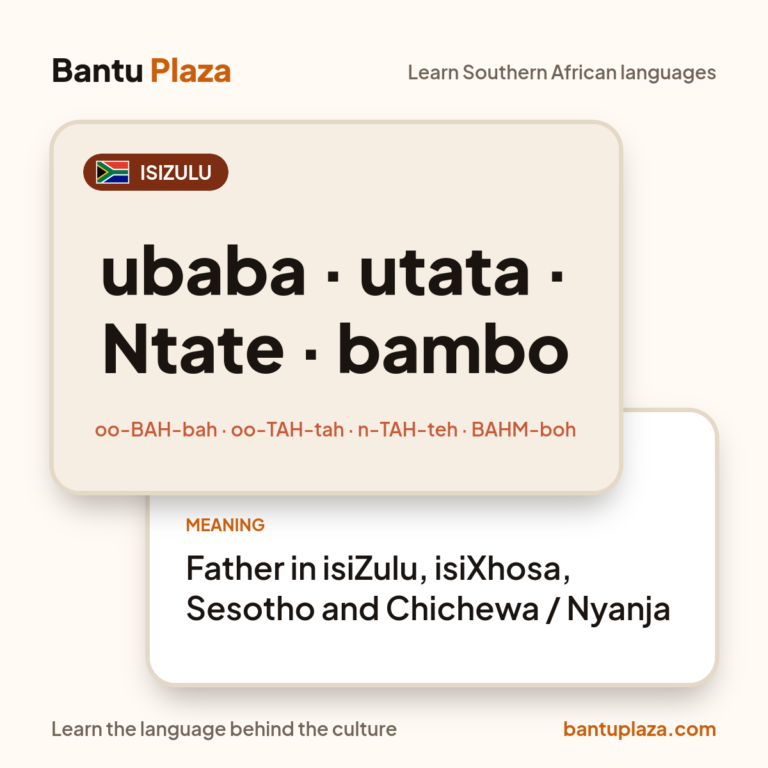
How to Say ‘Father’ in Eight Southern African Languages
Baba, tata, rre, ntate, bambo, tatana, isia. One small word in eight languages, and what it tells you about respect.
Read story: How to Say ‘Father’ in Eight Southern African LanguagesBotswana & South Africa
The food, names, greetings, sayings and everyday life behind Setswana, Botswana's national language and widely spoken in South Africa's North West. Each story links to words you can hear and practise in a free five-minute lesson.
Baba, tata, rre, ntate, bambo, tatana, isia. One small word in eight languages, and what it tells you about respect.
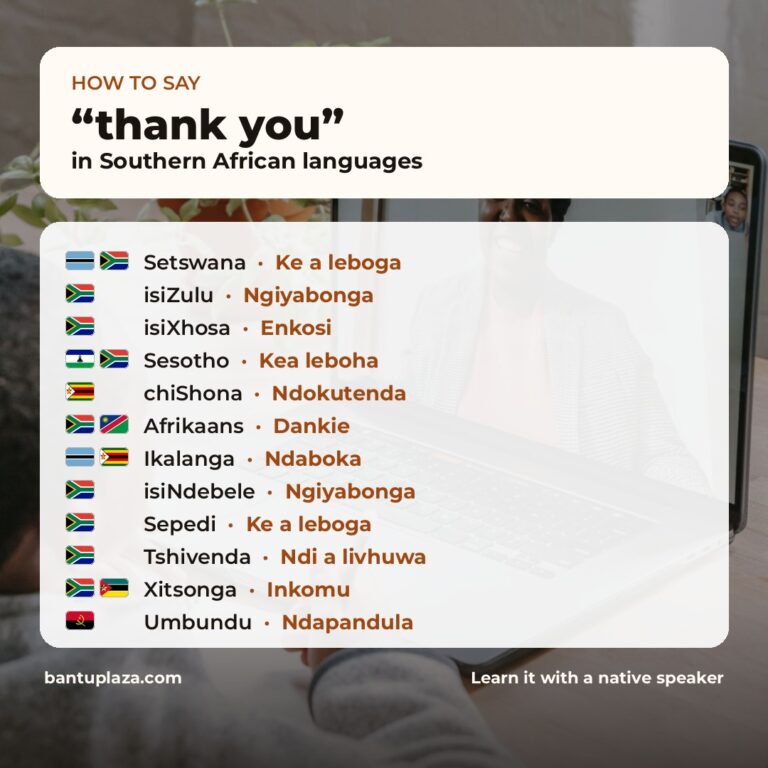
Read story: How to Say ‘Father’ in Eight Southern African LanguagesKe a leboga, ngiyabonga, enkosi, ndaboka, inkomu. Thank you in twelve Southern African languages, with the stronger form for when you really mean it.
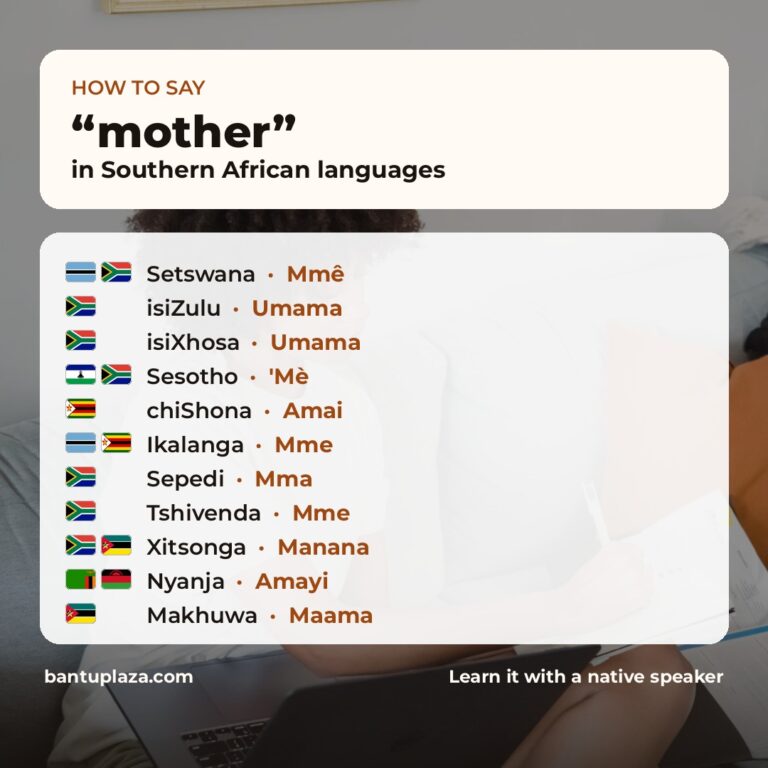
Read story: How to Say “Thank You” in 12 Southern African LanguagesMme, umama, amai, amayi, manana. The word for mother in eleven Southern African languages, and when it becomes a form of respect.
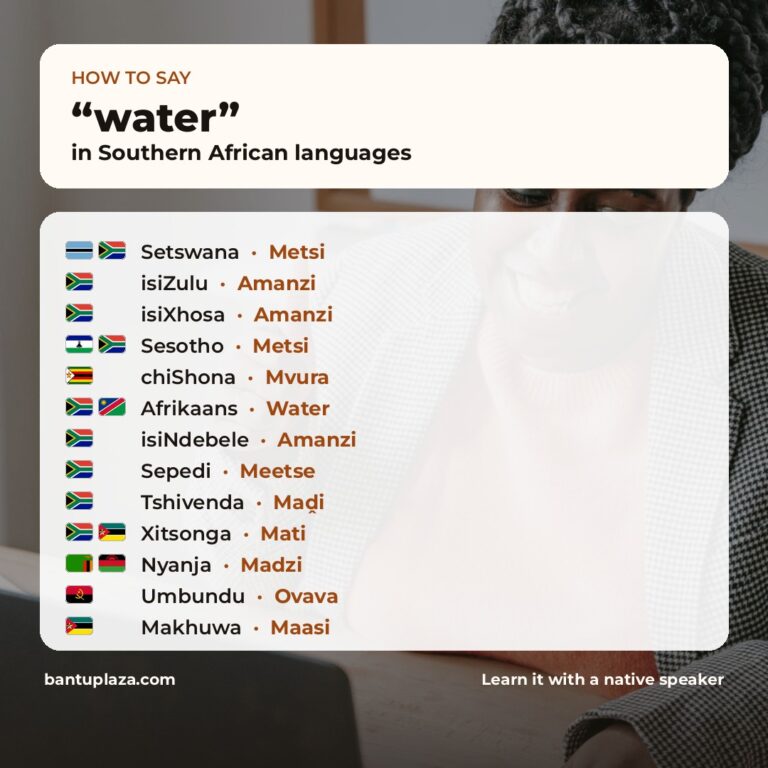
Read story: How to Say “Mother” in 11 Southern African LanguagesMetsi, amanzi, mvura, madzi, maasi. One everyday word in thirteen Southern African languages, with a say-it-like guide for each.
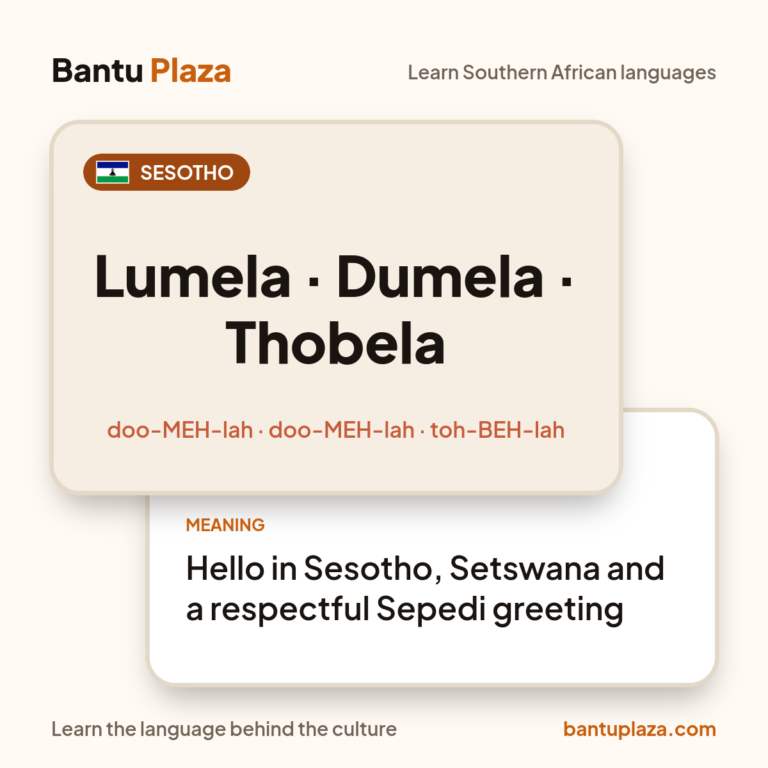
Read story: How to Say “Water” in 13 Southern African LanguagesLumela, dumela, dumelang, thobela. Three languages, one family, and a 1950s plan to merge them that never happened.
Read story: Sesotho, Setswana and Sepedi: How Close Are the Sotho-Tswana Languages?Happy Independence Day, Botswana. On 30 September 1966 Bechuanaland became Botswana, named after the Batswana, with a currency named after rain.
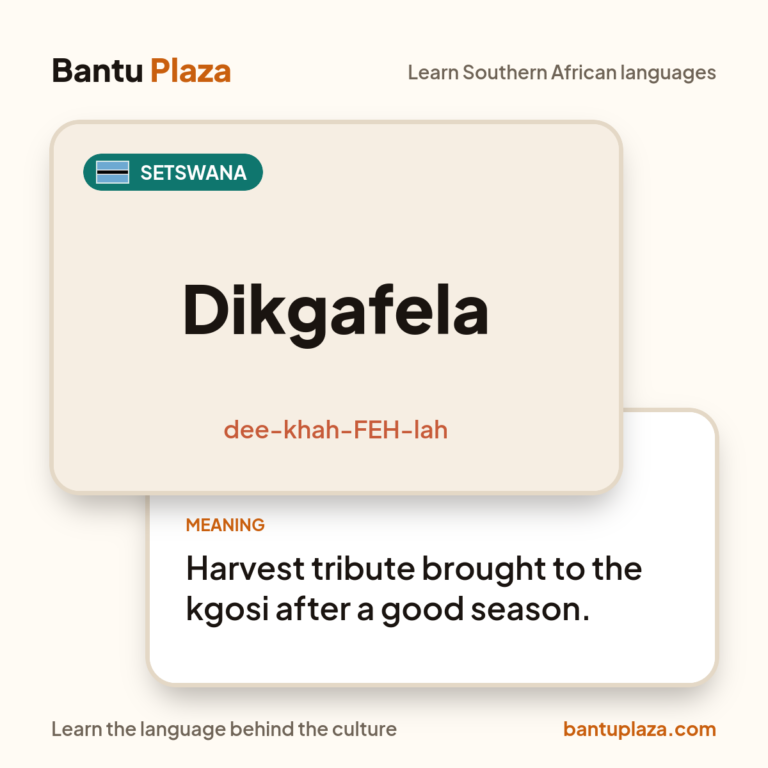
Read story: Happy Independence Day, Botswana: 30 September and the Setswana Spoken on Both Sides of the BorderWhen the harvest is good, communities in Botswana carry baskets of sorghum to the kgosi. Dikgafela gives thanks, asks for rain and fills the granary.
Read story: Dikgafela: Bringing the Harvest to the KgosiCulture guide
Compiled from the public sources listed under each section. Pronunciations are simple sound-it-out guides. Not yet reviewed by a native speaker: if something looks wrong, tell us.
O se tshege yo o weleng
Say it: oh seh TSHEH-geh yoh oh weh-LEHNG
"Do not laugh at the one who has fallen"
Take no pleasure in someone else's misfortune. You may face your own one day.
Tshwene e bone mapalamo
Say it: TSHWEH-neh eh BOH-neh mah-pah-LAH-moh
"The monkey has seen where to climb"
Think ahead about where your actions lead.
Ngwedi o tshega letsatsi
Say it: NGWEH-dee oh TSHEH-gah leh-TSAH-tsee
"The moon mocks the sun"
Like "the pot calling the kettle black": check yourself before judging others.
Sources: Bophelo and Stuff: Setswana proverbs and their meanings
Letsema is the tradition of neighbours coming together to help one family with a big task, such as ploughing, harvesting or building, in exchange for shared food and company rather than payment. Singing often turns the work into a celebration.
Say it: Letsema leh-TSEH-mah
Sources: BeingAfrican: neighbourly practices in Tswana culture
Bogobe (sorghum porridge) with seswaa (slow-cooked, pounded meat) and madila (soured milk) is the traditional Tswana table. Setapa is a dance known for fast, intricate footwork, often performed with singing and traditional instruments such as the segaba.
Say it: Bogobe boh-GOH-behSeswaa SEH-swahMadila mah-DEE-lahSetapa seh-TAH-pah
Sources: Wikipedia: Setapa
Before a Tswana couple is considered properly married, the groom's family makes patlo, a formal visit to the bride's family to ask for her hand and open talks on bogadi.
Bogadi is given by the groom's family to the bride's family. It is understood as thanks for raising her rather than a purchase. It was customarily paid in cattle and is more often paid in cash today.
Sources: Reach the World: bogadi · BeingAfrican: Tswana marriage practices
Setswana is spoken in Botswana & South Africa. It is Botswana's national language and widely spoken in South Africa's North West.
Yes. The free five-minute Setswana lesson runs in your browser with no account needed. You learn a few real greetings and phrases from the Bantu Plaza Setswana course.
Yes. Bantu Plaza lists Setswana tutors for one-to-one online lessons. You can compare tutors, prices and open times on the Find a tutor page.
The Setswana Complete Language Pack costs $49.99 and covers levels A1 to C2 of Setswana, with interactive lessons you use inside your Bantu Plaza account.
Culture stories and guides for every language we teach.
Newsletter
New stories, a word to try and a free lesson idea. No spam, unsubscribe anytime.
Start with a free five-minute lesson in your browser. No account needed.