Umbhaco and the isiXhosa Words Behind a Heritage Day Outfit
Umbhaco, iqhiya, ingxowa, isishweshwe: the isiXhosa names behind the outfits you will see on Heritage Day, and the designers giving them new life.
On Heritage Day you will see them everywhere from Gqeberha to Johannesburg offices: heavy cotton wraps decorated with beads, carefully tied head wraps, and beaded accessories. The cloth at the centre of many of those outfits is umbhaco, and if you want to compliment someone properly, it helps to know what each piece is called in isiXhosa.
What is umbhaco?
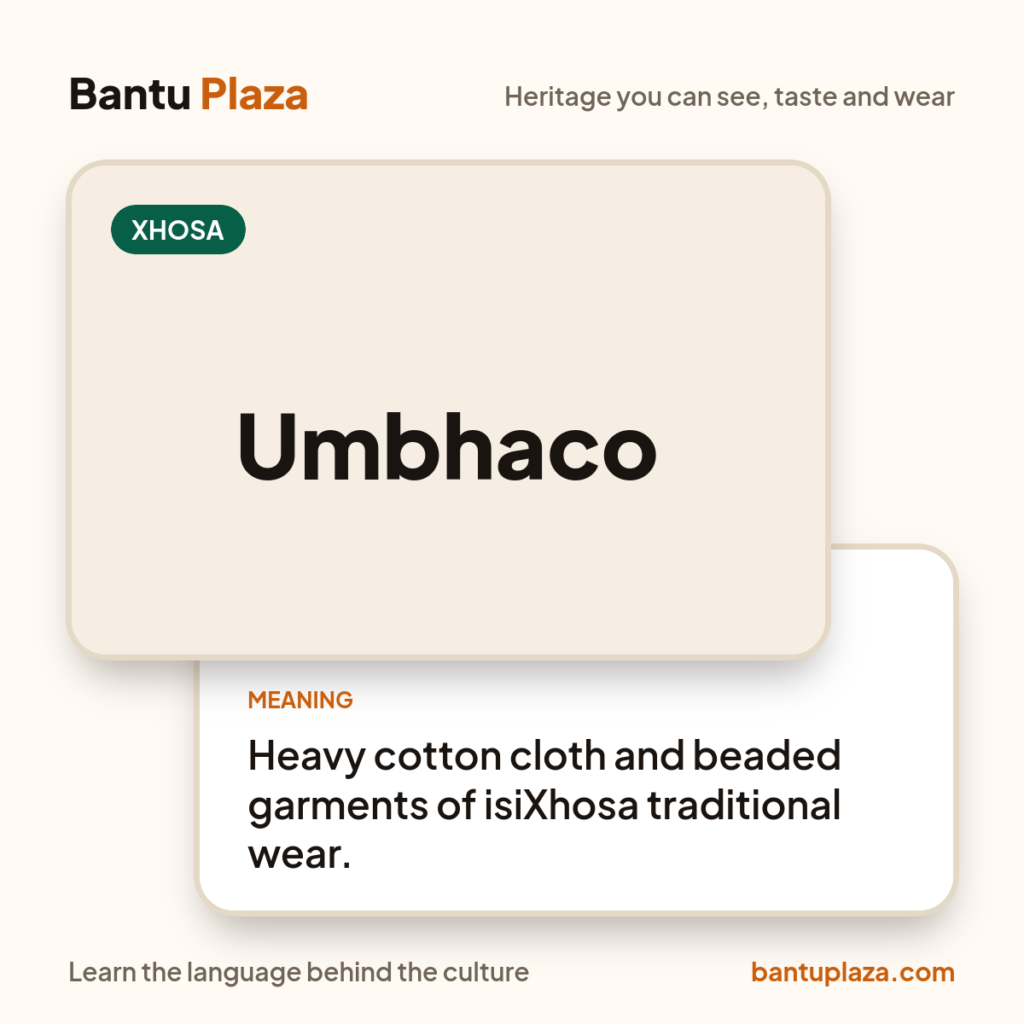
Umbhaco is the thick, coarsely woven cotton cloth at the heart of isiXhosa traditional wear, and the name for the garments made from it. IOL describes it as “a durable material used to create various bead-incorporated designs”, often assembled from several pieces into a layered outfit, and notes that “the heavier the material, the more expensive it is.” You will often hear the full phrase umbhaco wesiXhosa.
IOL reports that umbhaco is worn by both women and men, typically at celebrations and weddings. Styles differ between clans, regions and ages, so two outfits can be equally “traditional” and still look very different.
An umbhaco skirt in a New York museum
It is not only a modern fashion. The Metropolitan Museum of Art in New York holds an umbhaco wrap skirt from the mid-twentieth century, attributed to Xhosa or Mfengu makers and made of cotton, wool, glass beads, shell and ochre pigment. That ochre is part of why older pieces have their warm, earthy colour.
Iqhiya: the head wrap
The iqhiya is the head wrap, often worn as part of a complete outfit with umbhaco. The qh is an aspirated click, which makes this a word to hear from a speaker before you try it.
Ingxowa: the sling bag
The ingxowa, IOL explains, is a sling bag that completes the traditional attire. The gx is another click, voiced this time.
Isishweshwe, or iJeremani
Brides often wear a knee-length dress in printed indigo cloth, called isishweshwe or, in isiXhosa, iJeremani, “German”. Writer Vukile Pokwana has argued in The Herald that the style entered Xhosa dress in the mid-nineteenth century after contact with German settlers. It is a good reminder that heritage dress has always absorbed new materials.
The designers giving umbhaco new life
Traditional dress is also a living industry. MaXhosa, founded by designer Laduma Ngxokolo in 2010, describes itself as a cultural luxury brand built on “the referencing and evolution of traditional Xhosa beadwork aesthetics”. IOL points to Ngxokolo’s prints as an example of heritage blended with high fashion.
Words to know
| isiXhosa | Meaning | Say it like |
|---|---|---|
| umbhaco | heavy cotton cloth of traditional wear, and the garments made from it | the bh is a hard, fully voiced b |
| iqhiya | head wrap | qh is an aspirated click: learn it by ear |
| ingxowa | sling bag | gx is a voiced click: learn it by ear |
| Amasiko | customs, traditions | ah-mah-SEE-koh |
| Ilifa | heritage, inheritance | ee-LEE-fah |
| Umtshato | wedding | oom-TSHAH-toh |
| Ukubhiyozela | to celebrate | oo-koo-bee-yoh-ZEH-lah |
| Ndiyanxiba | I get dressed | ndee-yah-N[x]EE-bah, with a side click on the x |
In everyday conversation
Before any compliment, greet properly. Adding sisi (sister) or bhuti (brother) sounds warm and respectful, even with someone you do not know:
- Molo, sisi. Hello, sister.
- Mhle! (She or he is) beautiful.
- Enkosi. Thank you.
Quick facts
- Umbhaco is a thick cotton cloth used for bead-incorporated isiXhosa traditional wear; heavier material costs more.
- It is worn by both women and men, typically at celebrations and weddings.
- The Met holds a mid-twentieth-century umbhaco wrap skirt made with cotton, wool, glass beads, shell and ochre.
- Iqhiya is the head wrap and ingxowa the sling bag that completes the outfit.
- MaXhosa was founded by Laduma Ngxokolo in 2010.
Frequently asked questions
What is umbhaco?
Umbhaco is the thick, coarsely woven cotton cloth at the heart of isiXhosa traditional wear, often decorated with beads, and also the name for the garments made from it.
What is an iqhiya?
An iqhiya is a head wrap, often worn as part of a complete outfit with umbhaco. The qh in the word is an aspirated click.
What is isishweshwe called in isiXhosa?
Isishweshwe, the printed indigo cloth often worn by brides as a knee-length dress, is also called iJeremani, meaning “German”.
What are you wearing?
Will you wear umbhaco, isishweshwe, or something of your own design this Heritage Day? What is each piece called in your family? Read more about the outfit in IOL’s feature on umbhaco wesiXhosa, or see how heritage looks in Botswana in our story on Dikgafela, the harvest tribute to the kgosi.
Clicks are much easier with feedback. Our isiXhosa hub has lessons at every level, and the isiXhosa Complete Language Pack (A1 to C2) covers culture, customs and ceremonies. Start a free 5-minute isiXhosa lesson, or book a trial with an isiXhosa tutor who can help you say iqhiya and ingxowa with confidence before Heritage Day.
Quick check
Did you already know the word "Umbhaco"?
Umbhaco
Heavy cotton cloth and beaded garments of isiXhosa traditional wear.
Learn more isiXhosa words freeWant to understand more than the translation?
Learn the language behind the culture.
Newsletter
Get one culture story a week
New stories, a word to try and a free lesson idea. No spam, unsubscribe anytime.
Join the conversation
Question for you Will you wear umbhaco, isishweshwe, or something of your own design this Heritage Day?
Do you know this tradition, a different version of it, or the word for it in another language? Share it below.