Umbundu: Angola’s Most Spoken African Language
Angola's 2014 census found 23% of people habitually speak Umbundu at home, more than any other African language in the country.
Ask what language Angolans speak and you will usually hear one answer. The country’s census tells a fuller story, and one African language stands out: the Umbundu language, spoken at home by roughly one in four people in Angola.
What the census found
Angola’s national statistics institute (INE) published the definitive results of the 2014 census in 2016. Its section on languages habitually spoken at home shows Umbundu at 23.0%, the highest figure for any African language in the country. People could report more than one language, which is why the percentages add up to more than 100.
That makes Umbundu the language of roughly one in four Angolans at home. You can read the figures in INE’s definitive results of the 2014 census.
Where the Umbundu language is spoken
Umbundu is the language of the Ovimbundu, the Umbundu-speaking peoples of Angola’s central highlands, around Huambo, Bié and Benguela. Our course notes that speakers live mainly in the highlands and on the coast around Benguela and Lobito, with large communities in Luanda.
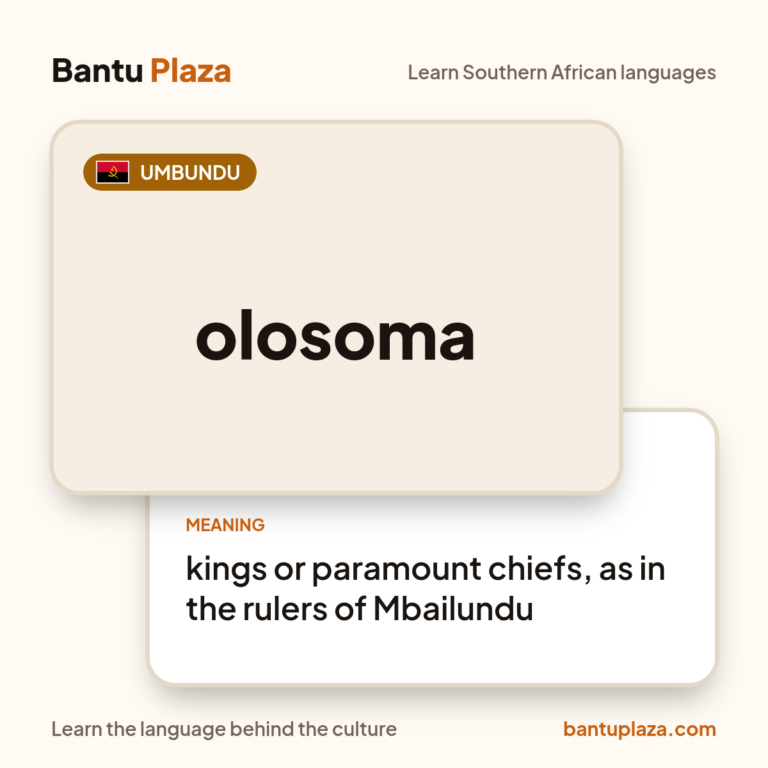
Historians writing in the journal Kronos describe powerful highland kingdoms such as Mbailundu that dominated trade in the region in the 19th century. The Kronos article on Mbailundu also notes that North American Protestant missionaries in the late 19th century wrote down the language and translated the Bible into Umbundu, which helped build a shared sense of identity. If you want the story of that kingdom, read Bailundo: the town that began as an Umbundu kingdom.
Angola became independent from Portugal in 1975, and a long civil war followed, lasting until 2002. Through all of that, Umbundu has remained a language of home for millions of people.
What Umbundu sounds like
A few features make Umbundu distinctive for learners:
- Its alphabet has no q, r, x or z, and every word ends in a vowel.
- It has nasal vowels, written with a tilde: omẽle (morning).
- The letter c is always said “ch”, as in church: ciwa (good, well) sounds like CHEE-wah.
- It is a tone language. High and low pitch can change meaning, but tone is not written, so you learn it by ear. Our course gives an example: onjila means road, but said with a different melody it also means bird.
You may also notice two spelling traditions in older books, one from Protestant and one from Catholic missions. Our course follows the standard spelling used in current Umbundu publications and Angolan teaching materials.
Greetings that depend on who answers
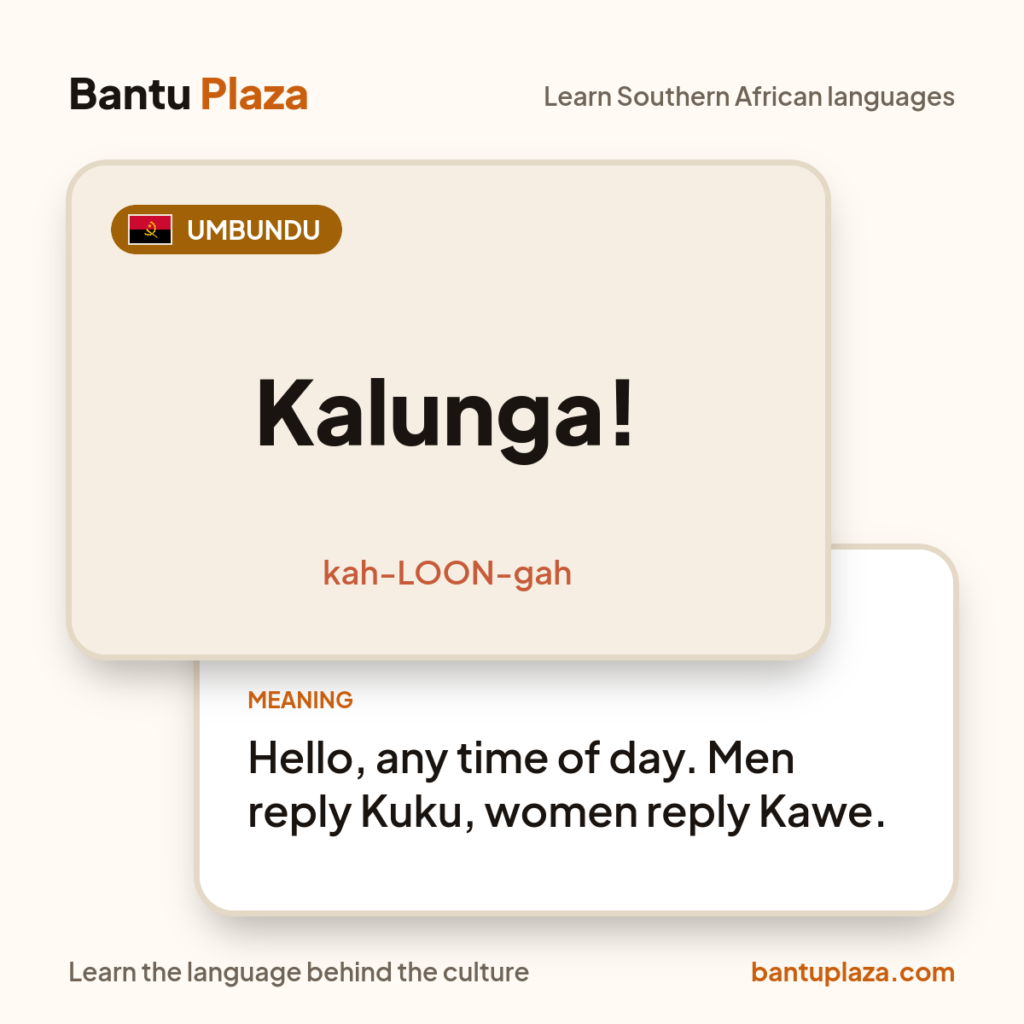
This is one of our favourite details. Kalunga! is hello to one person, at any time of day. To a group, it becomes Kalungi! The reply depends on who is answering: men say Kuku, women say Kawe.
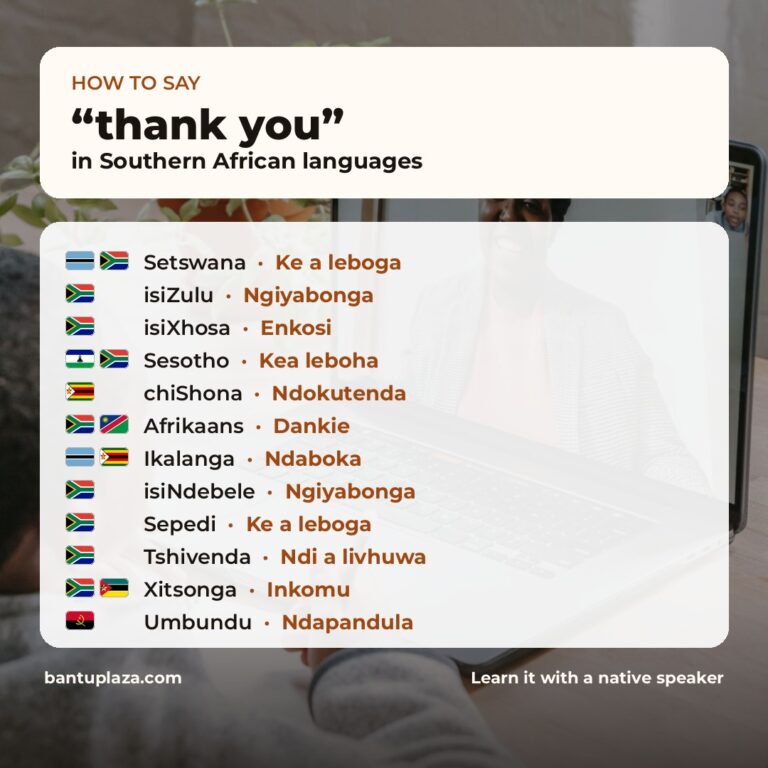
In the morning, people ask if you slept well: Walalepo? Later in the day, they ask if the day went well: Wosalapo? And when you want to say thank you: Ndapandula.
Words to know
| Umbundu | Meaning | Say it like |
|---|---|---|
| Kalunga! | hello, to one person, at any time of day | kah-LOON-gah |
| Kalungi! | hello, to two or more people | kah-LOON-gee |
| Kuku / Kawe | the reply to Kalunga, from a man / from a woman | KOO-koo / KAH-weh |
| Walalepo? | did you sleep well? (morning) | wah-lah-LEH-poh |
| Wosalapo? | did you have a good day? (afternoon and evening) | woh-sah-LAH-poh |
| Ndapandula | thank you | ndah-pahn-DOO-lah |
| omẽle | morning | oh-MEHN-leh |
| Ndi vangula Umbundu | I speak Umbundu | ndee vahn-GOO-lah oom-BOON-doo |
In everyday conversation
- Kalunga! Hello!
- Kawe. Walalepo? Hello. Did you sleep well?
- Nda lale, ove hẽ? I slept well, and you?
Quick facts
- Angola’s 2014 census recorded Umbundu at 23.0% of people speaking it at home, the highest figure for any African language in the country.
- It is the language of the Ovimbundu of Angola’s central highlands, around Huambo, Bié and Benguela.
- North American Protestant missionaries wrote the language down and translated the Bible into Umbundu in the late 19th century.
- Umbundu is a tone language with nasal vowels written with a tilde.
Frequently asked questions
Where is the Umbundu language spoken?
Umbundu is spoken mainly in Angola’s central highlands, around Huambo, Bié and Benguela, and on the coast around Benguela and Lobito, with large communities in Luanda.
What percentage of Angolans speak Umbundu?
In the 2014 census, 23.0% of people said they habitually speak Umbundu at home, the highest figure for any African language in Angola. People could report more than one language.
Is Umbundu a tone language?
Yes. High and low pitch can change meaning, but tone is not written, so learners pick it up by ear.
Over to you
If you speak Umbundu, did you grow up with it at home, or did you learn it from grandparents later? And do you use Kuku and Kawe the way we describe?
Umbundu is one of our newer languages, and our materials are reviewed with native and fluent speakers. Practise the greetings in the free 5-minute Umbundu lesson, visit the Umbundu hub, or get the Umbundu: Starter Pack (A1) to learn greetings, family words and everyday phrases step by step.
Quick check
Did you already know the word "Kalunga!"?
Kalunga! kah-LOON-gah
Hello, any time of day. Men reply Kuku, women reply Kawe.
Learn more Umbundu words freeWant to understand more than the translation?
Learn the language behind the culture.
Newsletter
Get one culture story a week
New stories, a word to try and a free lesson idea. No spam, unsubscribe anytime.
Join the conversation
Question for you If you speak Umbundu, did you grow up with it at home, or did you learn it from grandparents later?
Do you know this tradition, a different version of it, or the word for it in another language? Share it below.